
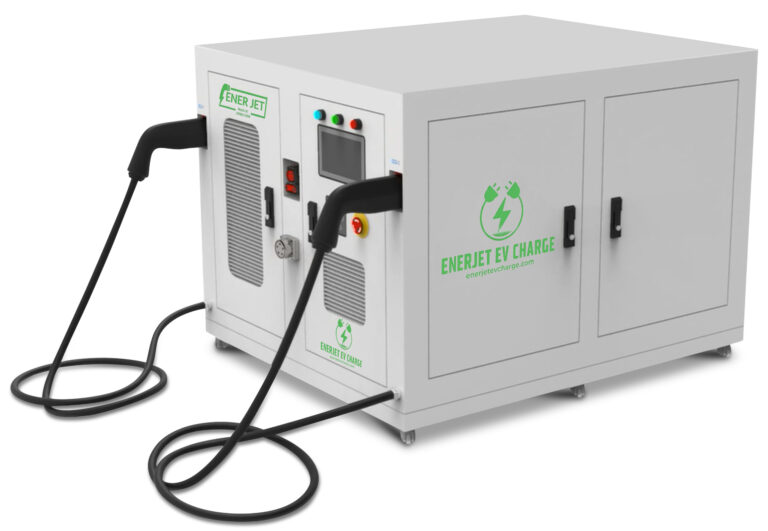
Level 3 DC fast charging
DC Fast Chargers From 30 To 240 kW
Stand-alone stations, portable units you can roll to the car, and a battery-powered mobile charger for roadside rescue.
Every charger carries a UL, TUV Rheinland or SGS certificate
No 480V On Site?
You have two ways to run a DC fast charger on 240V.
Runs on 240V single-phase power. $6,999
Runs a 30, 60 or 120 kW charger from 240V. From $5,995
Input power
480V 3-phase, or 240V
One portable model runs on 240V
Charging plug
CCS1
Tesla connector on some models
Certificate
UL, TUV Rheinland or SGS
Shown on each model below
Shipping
Free
In the contiguous 48 states
Three kinds of charger
Choose By How You'll Use It
Stand-Alone Stations
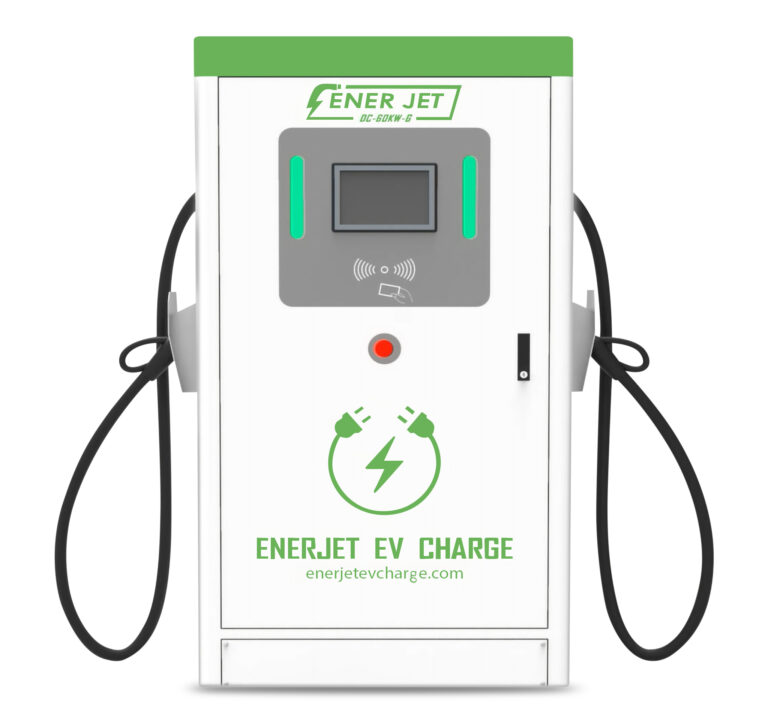
Installed on site and wired to 480V 3-phase power.
6 models · 30 to 240 kW
Pay over time with at checkout.
- TUV Rheinland listed
- 480V 3-phase
- 3 CCS1
Pay over time with at checkout.
Portable Chargers
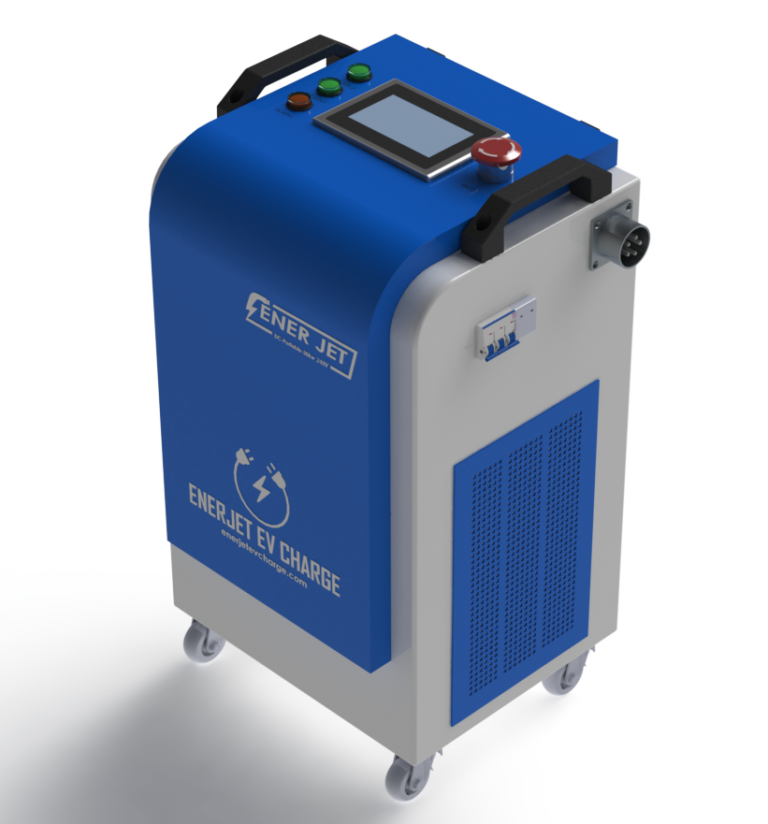
On wheels, with no battery: roll the charger to the car and plug it into site power.
3 models · 30 or 60 kW
Pay over time with at checkout.
Mobile Charger
A battery on board, so it charges a car where there is no power at all.
1 model · 30 kW
- UL listed
- 30 kWh battery
- 1 or 2 CCS1, or Tesla
Recharges at a DC station, on 480V 3-phase power, or DC-to-DC.
Pay over time with at checkout.
All ten chargers
Compare The Chargers
Compare all ten chargersPower, input, connectors, certificate and price, side by side
Running on 240V
No 480V On Site?
Most of the range is wired to 480V 3-phase power. If your site has 240V, there are two ways to go.
Option 1
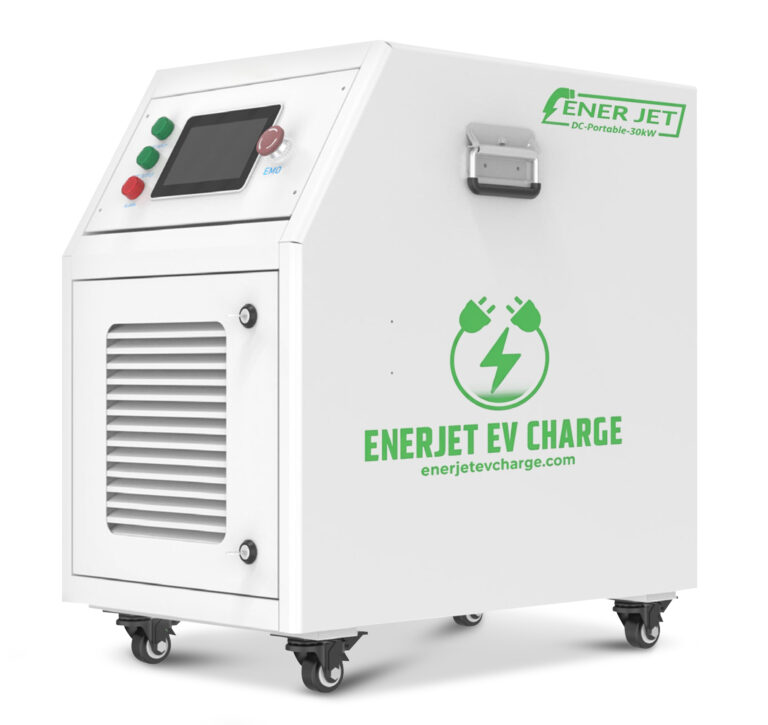
Choose the 240V portable
The only charger in the range that runs on 240V single-phase power, with no transformer.
Option 2
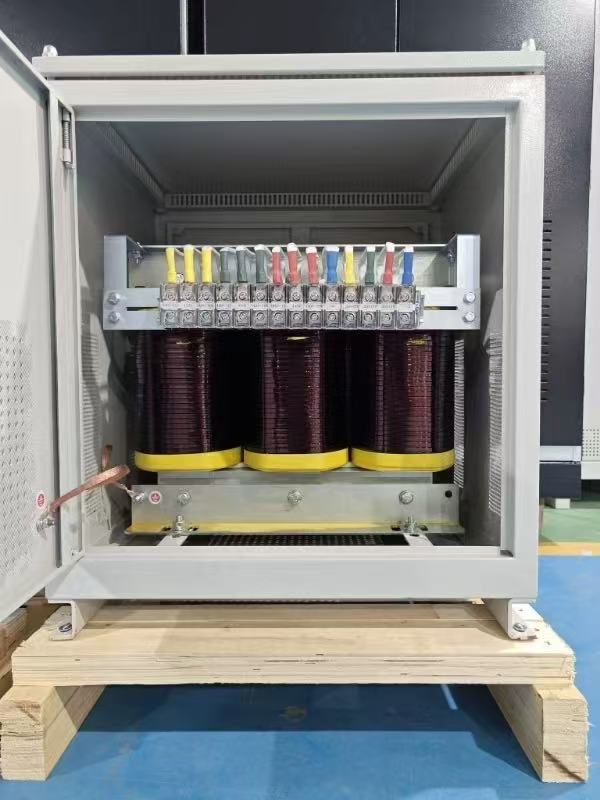
Add a step-up transformer
Each one is matched to a charger size and takes 240V single-phase input.
Dry-type isolation transformers, UL certified, with a 2-year warranty.
Before you buy
What It Costs To Run
The charger is one cost. To bill drivers you also need charging software, which is sold separately.
OCPP built in
2.0.1 and 1.6J
The open standard that connects a charger to charging software.
Charging software
Sold separately
You need it to take payment. Our software partner charges about $50 a month.
How drivers pay
QR code
Our partner supplies a code for the charger. Drivers scan it to pay.
Solar Generators And Off-Grid AC Chargers
EnerJet, EnerJet Pro and EnerJet Pro 2.0.
3 models
Pay over time with at checkout.
After you buy
Technical Support And Installation
Technical support, Monday to Friday, 9am to 5pm PST. Call +1 (866) 894-1285 or email sales@enerjetevcharge.com.
Need an installer? We have a growing network of affiliate licensed electricians and will connect you with one.
Watch the installation video
Questions and answers
What Buyers Ask First
Is the charger listed for installation in the US?
Yes. The National Electrical Code requires EV charging stations to be listed by a Nationally Recognized Testing Lab (NRTL), which is a lab approved by OSHA, such as UL or SGS. Every EnerJet charger carries a UL, TUV Rheinland or SGS certificate, shown on each model above. “Listed” means the lab has tested the equipment, and you can check it on the lab’s website.
What power does my site need?
Most of the range runs on 480V 3-phase power, which is standard for Level 3 DC charging. If your site only has 240V single-phase, you have two options: the Enerjet DC Portable 30kW (240V Input), which runs on 240V directly, or a step-up transformer matched to your charger: 45KVA for 30 kW, 75KVA for 60 kW or 150KVA for 120 kW.
The Mobile DC 30KWH/30KW carries its own battery, which is recharged at a public DC charging station or on 480V 3-phase power at your facility.
Not sure what you have? Send us a message and we’ll help you work it out.
What does the charging software cost, and how do drivers pay?
Every charger has OCPP 2.0.1 and 1.6J built in. That’s the open standard that connects a charger to charging software. To take payment you need charging software, which is sold separately. We refer buyers to Killswitch, which charges about $50 a month. Killswitch supplies a QR code that goes on the charger, and drivers scan it to pay.
What is the difference between a 30, 60, 120 and 240 kW charger?
kW is how much power the charger delivers: the higher the number, the faster it charges. For example, a 30 kW charger adds about 100 miles of range per hour, while a 240 kW charger can add up to 800 miles per hour.